Quadratic functions are a fundamental concept in algebra that describe the shape of a parabola. Understanding the transformations of quadratic functions is crucial for solving various mathematical problems.
When we talk about transformations of quadratic functions, we refer to how the graph of a basic quadratic function, y = x^2, changes when certain operations are performed on it. These operations include shifting the graph up or down, left or right, stretching or compressing it, and reflecting it.
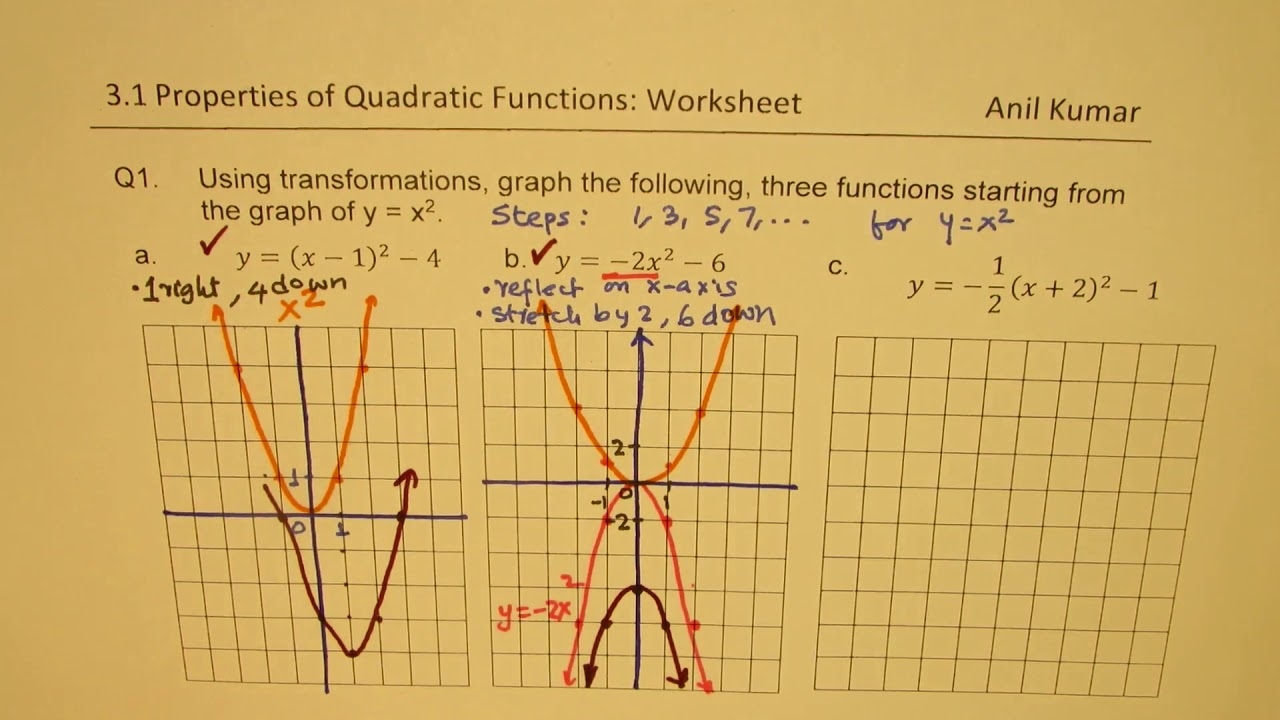
transformations of quadratic functions
Exploring the Transformations of Quadratic Functions
One common transformation is vertical shifting, where adding or subtracting a constant value to the function changes its position on the y-axis. Horizontal shifting involves adding or subtracting a constant inside the function, shifting it left or right on the x-axis.
Stretching or compressing a quadratic function alters the width of the parabola. A coefficient greater than 1 stretches the graph vertically, while a coefficient between 0 and 1 compresses it. Reflection occurs when the leading coefficient is negative, flipping the parabola upside down.
Understanding these transformations allows us to manipulate quadratic functions to fit specific requirements in mathematical problems. By applying these operations, we can analyze and graph various quadratic functions efficiently, enabling us to solve equations and interpret real-world scenarios accurately.
In conclusion, mastering the transformations of quadratic functions is essential for any student or individual working with algebraic concepts. By grasping how these operations impact the graph of a quadratic function, one can enhance their problem-solving skills and mathematical understanding significantly.
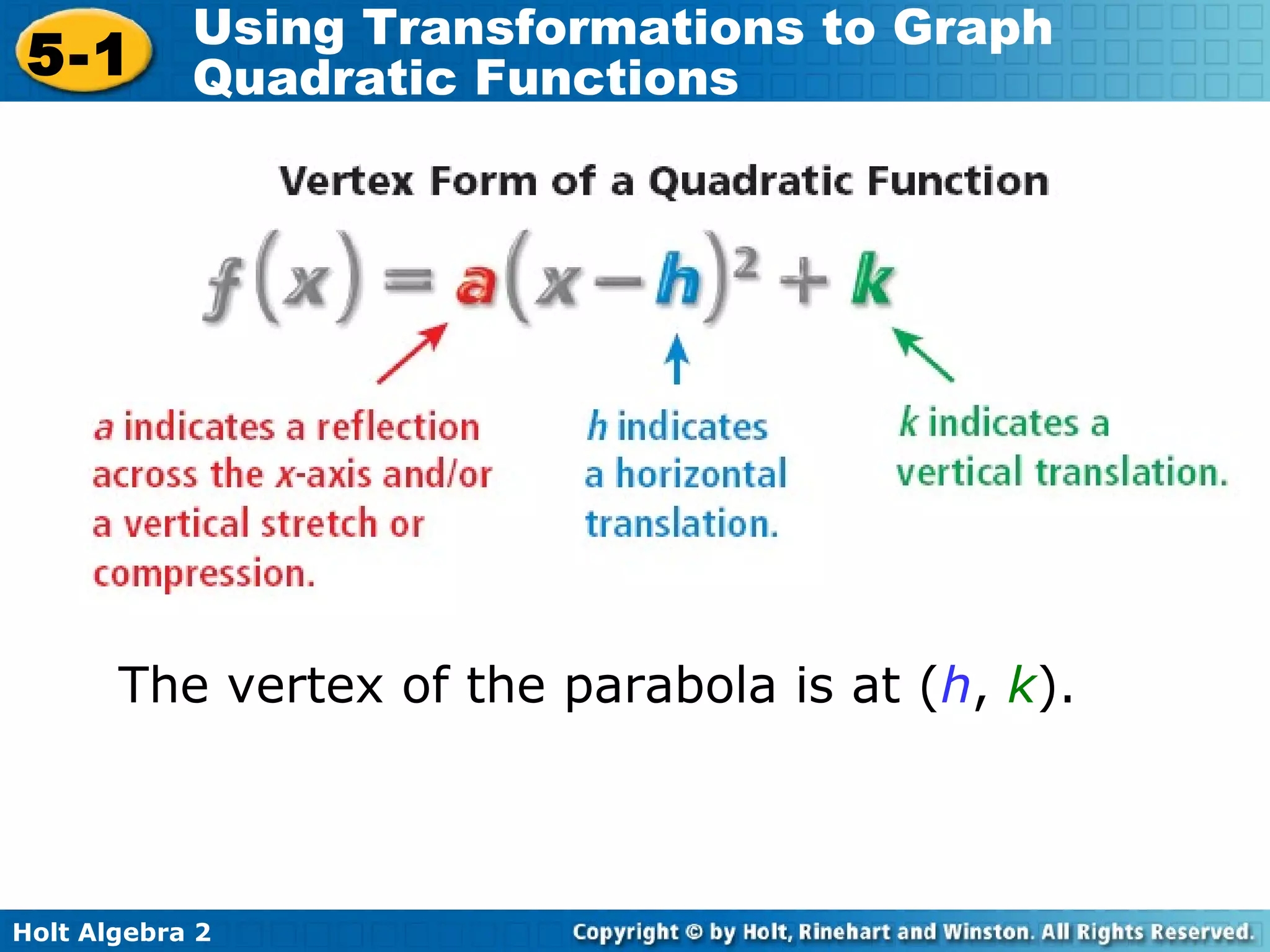
5 1 Quadratic Transformations PPT
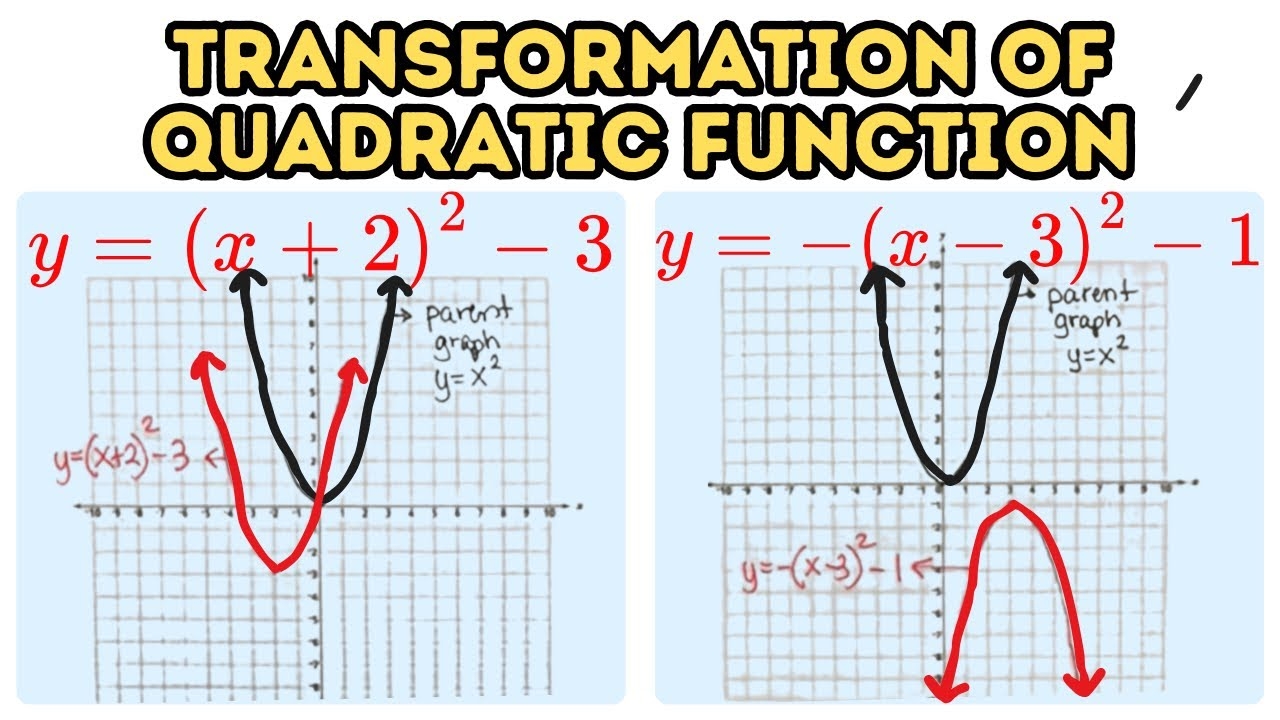
Transformation Of Quadratic Function YouTube
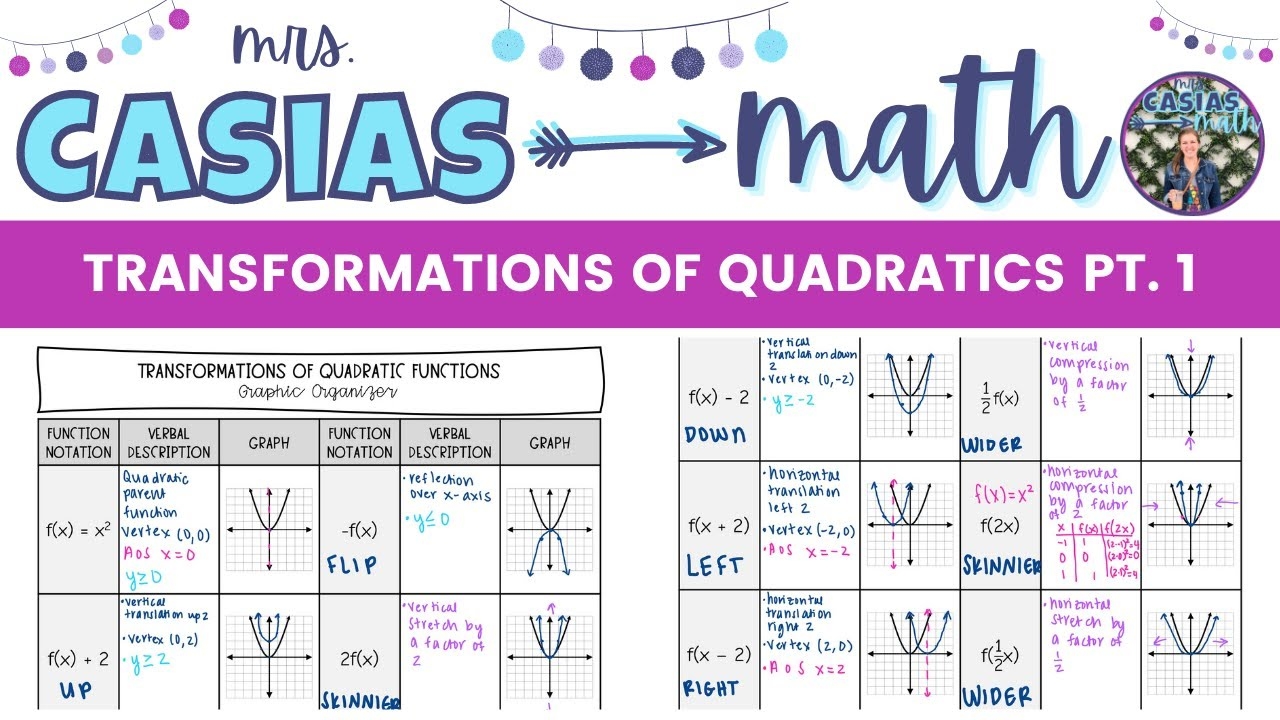
Transformations Of Quadratic Functions With Desmos The Basics Algebra 1 Lesson YouTube
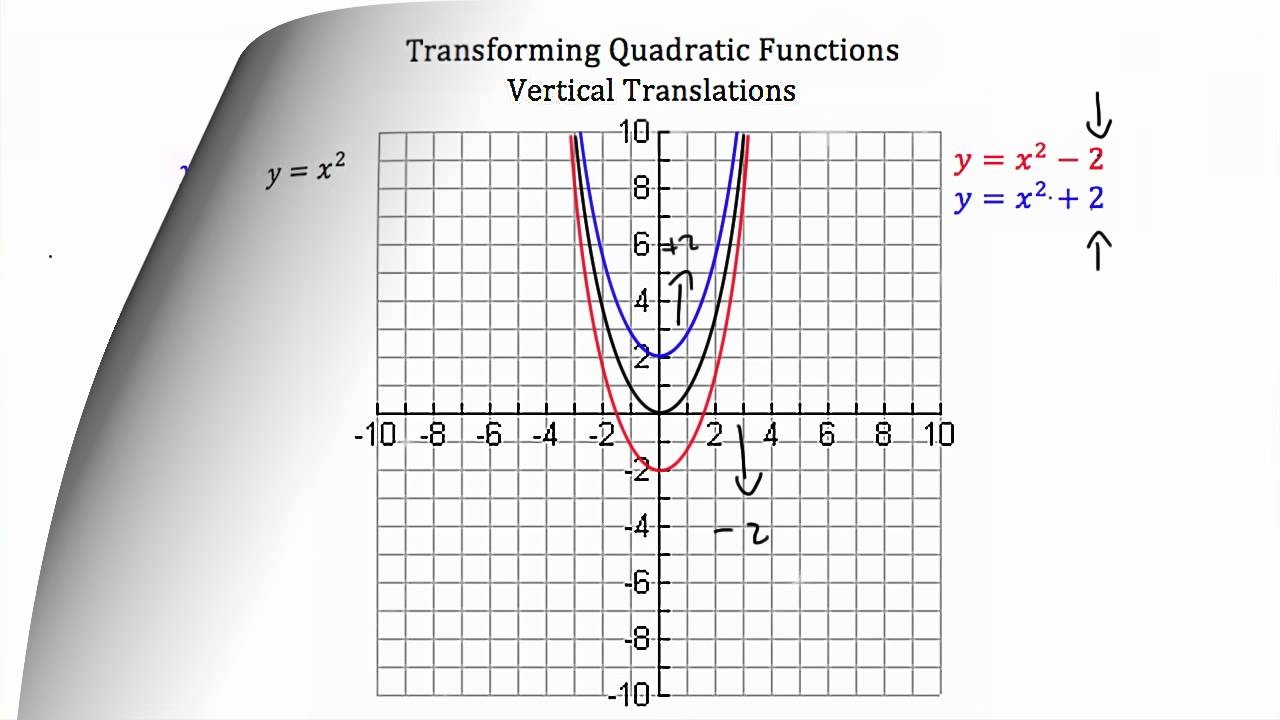
Transforming Quadratic Functions YouTube
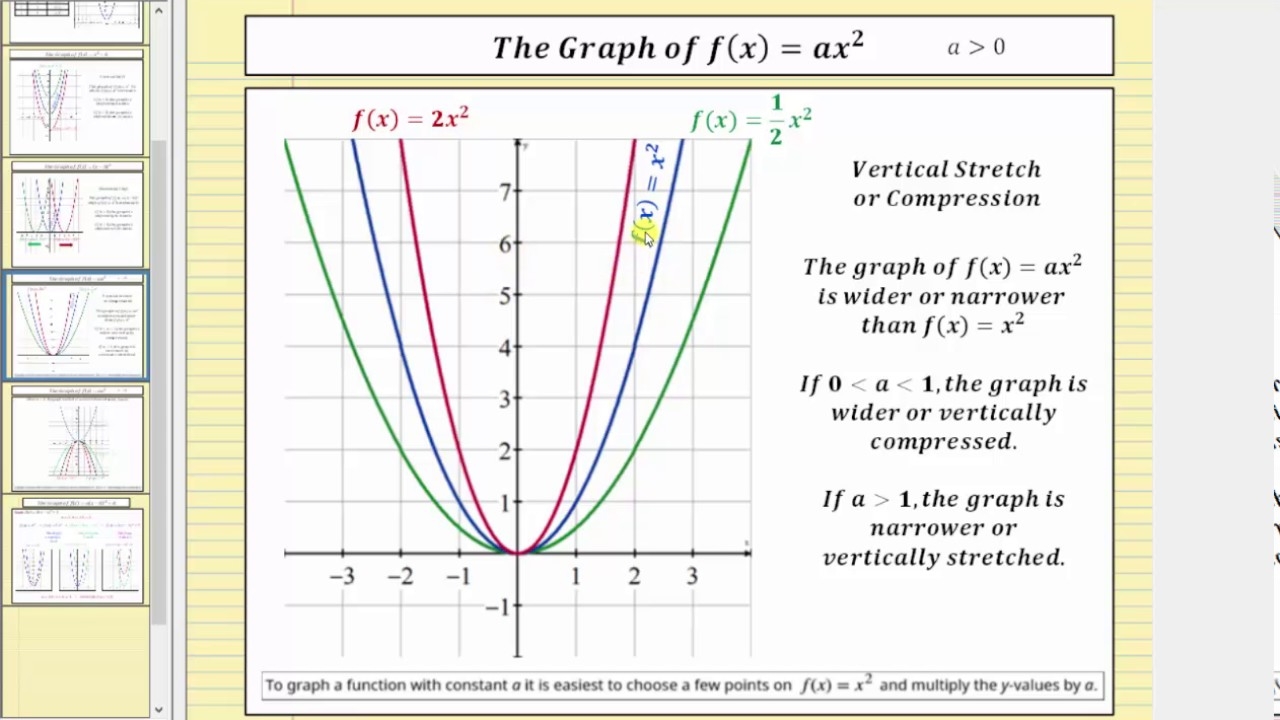
Quadratic Function Transformations YouTube